Paris is delivering menswear drama, Milan is gearing up for couture, and once again the runways offer everything we expect: sculptural tailoring, exaggerated silhouettes, textile innovation and a masterclass in aesthetic storytelling. Fashion is at its peak spectacle — the conversation around creativity is loud, bold, extravagant. But within all the spectacle, one quiet, almost awkward absence stands out: Where is hemp?
While sustainability remains one of the industry’s loudest talking points, one of the most environmentally friendly fibers on the planet remains almost invisible. And that’s surprising, considering CBD and hemp-based wellness have already gone fully mainstream in lifestyle culture. So why hasn’t hemp caught up in fashion? Why do we see it in eco-capsules and streetwear tees, but not on the runways of Paris or the couture ateliers of Milan? And could that ever change?
THEORETICALL ICONIC. PRACTICALLY MISSING.
Hemp should be a designer’s dream: it’s durable, antibacterial, breathable, low-impact and fully biodegradable. On paper, it checks every sustainability box luxury loves to reference. And yet hemp is still far from being a go-to fabric in contemporary fashion. The reasons are less emotional and much more structural, technical and industry-bound than most people imagine.
WHY HEMP ISN`T A MAINSTREAM FASHION MATERIAL (YET)
Hemp is not missing from fashion because designers lack imagination — it’s missing because the industry around it was never built. For decades, hemp cultivation was heavily regulated or illegal, which blocked research, halted machine development, and prevented the fiber from evolving into a stable textile category.
1. High Costs & Low Production Volume
Hemp is, for now, more expensive than cotton or polyester—not because the plant is costly, but because the industrial ecosystem around it barely exists. Global production remains low, supply chains are fragmented, and the necessary machinery and processing technology are still underdeveloped. Without economies of scale, hemp simply cannot compete on price. The fashion world has spent over a century building a massive, optimized infrastructure for cotton; hemp never received that advantage, which leaves it structurally behind.
2. Decades of Regulation & Stigma
Although industrial hemp is non-psychoactive, decades of strict regulation restricted or outright banned its cultivation in many regions. This stalled research, prevented investment and limited the development of large-scale farming. Processing technologies lagged far behind other fibers. While cotton industrialized and modernized, hemp remained frozen in time, unable to evolve with the rest of the textile industry.
3. A Technically Challenging Fiber
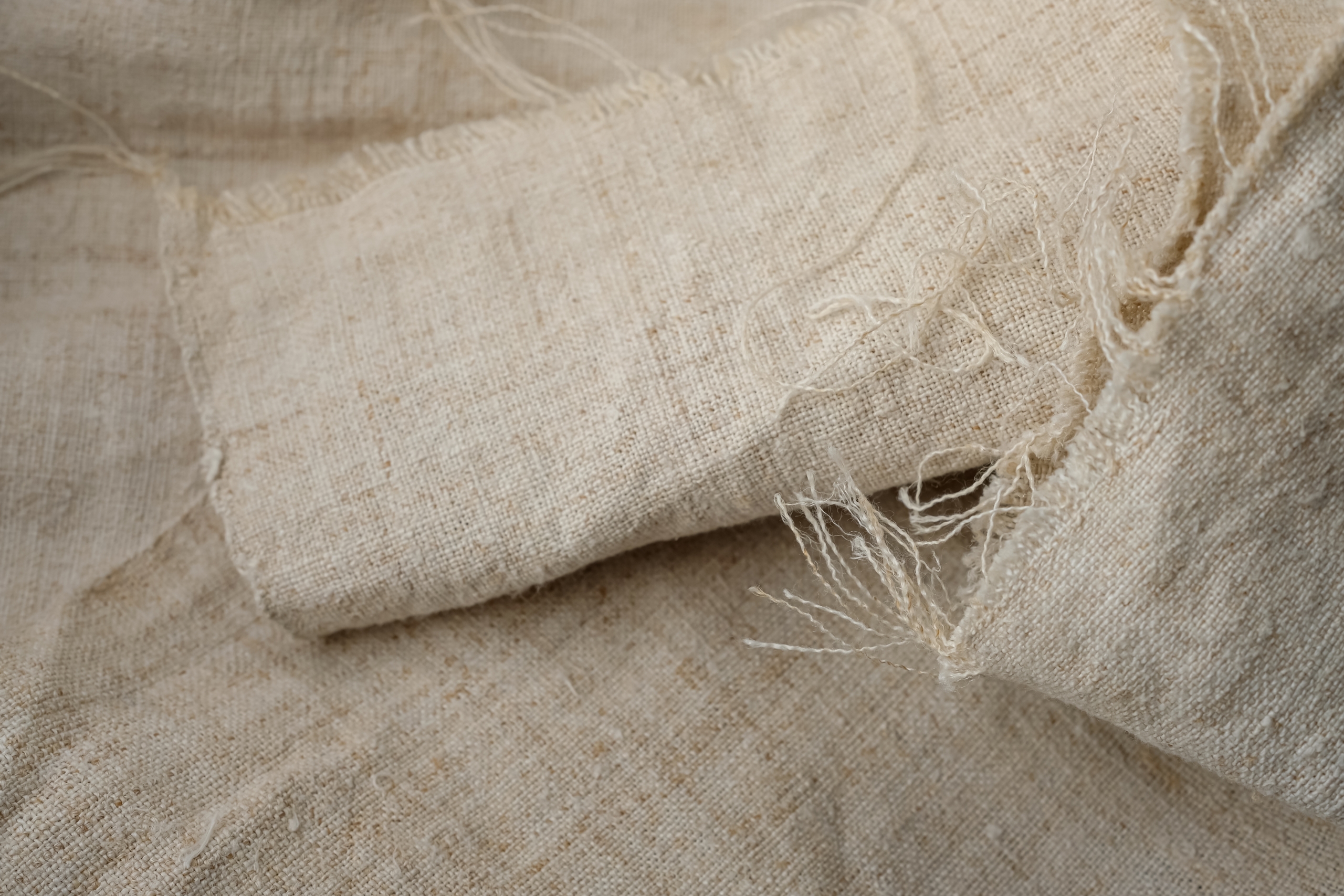
Hemp fibers are naturally stiff, thick and extremely strong—qualities that make them durable but also very difficult to turn into soft, wearable textiles. To make hemp suitable for fashion, manufacturers need intensive breaking processes, enzymatic softening treatments, specialized spinning techniques and machinery that differs from standard cotton equipment. Many factories are not equipped for this level of complexity, making production costly, slow and prone to inconsistencies.
4. Not Naturally Soft — And Fashion Loves Softness
Modern consumers expect immediate comfort, smooth surfaces and fabrics that drape effortlessly. Hemp does not naturally offer these characteristics. Innovations like “cottonized hemp,” used by brands such as Levi’s, soften the fiber considerably, but the process is expensive, technologically demanding and difficult to scale. As long as softness remains a core expectation, hemp will struggle to compete with more compliant fibers.
5. Color & Finish Limitations
Hemp absorbs dye differently than cotton, often resulting in matte, earthy tones with lower saturation that tend to fade more quickly. In a fashion landscape driven by precise color stories, high-gloss finishes and intense vibrancy, this limited dye performance becomes a considerable disadvantage. Achieving more vivid colors typically requires extra processing steps—adding cost and complexity.

6. Wrinkling: More Linen Than Luxury
Hemp wrinkles easily and requires more care, behaving similarly to linen but often in a stronger, more pronounced way. This makes it far less suitable for fast fashion, which relies on easy-care fabrics with minimal maintenance demands. In luxury fashion, hemp can work aesthetically, but only within specific lines that deliberately embrace natural texture or an unrefined look. Outside those niches, the fiber quickly reaches its limits.
Even today, hemp production remains small, expensive, and technically demanding. The fiber is naturally stiff and strong, which makes it durable but extremely challenging to soften, spin, dye and process on standard high-speed textile machinery. Creating a fabric that feels and behaves like cotton requires complex enzymatic treatments and specialized equipment — both costly, both difficult to scale. The result is simple: Fashion knows what it could do with hemp, but the infrastructure to do it doesn’t exist at industrial scale.
WHY WE MOSTLY SEE HEMP IN STREETWEAR – AND WHY THAT REVEALS ITS LIMITS
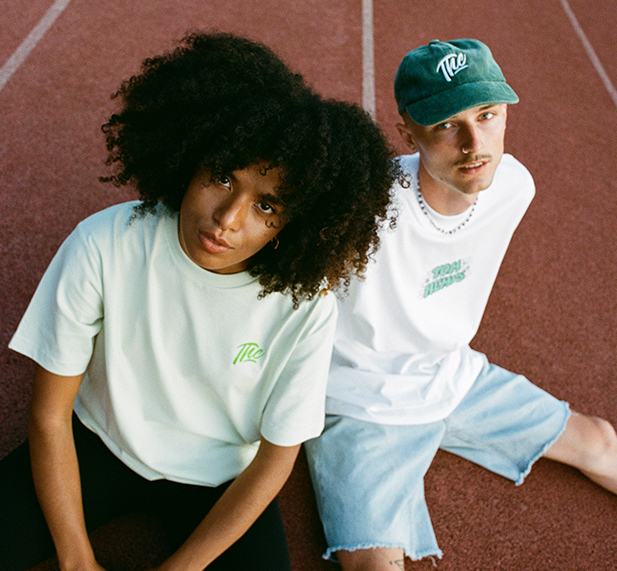
One area where hemp is visible is streetwear. Brands like Afends, Jungmaven, Patagonia and Outerknown use hemp for heavy tees, hoodies, simple tops or rugged workwear. These silhouettes work with the natural texture of hemp rather than against it, celebrating the roughness, matte surfaces and organic feel. Streetwear audiences embrace that aesthetic — but luxury and high fashion do not. They require drape, softness, visual precision, deep color saturation and perfect finishing. Hemp simply cannot deliver these characteristics consistently with current technology. This visibility in streetwear is therefore not proof that hemp is about to explode in fashion. It’s proof of the opposite: hemp currently only works in a narrow aesthetic zone, highlighting exactly where its technical and visual limitations lie.
HEMP AND SLOW FASHION: THE ONE SPACE WHERE THE FIBRE ALREADY THRIVES
While high fashion continues to avoid hemp, the slow-fashion movement has embraced it wholeheartedly. In a space where longevity matters more than trend cycles, where natural textures are celebrated and clothes are designed to age gracefully, hemp finds a natural home. Brands working within slow fashion value hemp for its honest texture, its durability, its breathability and its minimal environmental footprint. They appreciate that the fiber softens with time, gains character and signals a kind of quiet authenticity that aligns perfectly with slow-fashion ideals.
But exactly this strength highlights the gap to mainstream fashion. Slow fashion welcomes matte colors, visible weave structures and a certain roughness — while high fashion demands technical perfection, fluidity and visual purity. The contrast makes one thing clear: slow fashion proves that hemp works — but luxury fashion exposes how far it still has to go.
WHICH LABELS ARE USING HEMP – AND WHAT THAT TELLS US
A handful of designers and brands work with hemp today, but almost always in small quantities or blends.
Isabel Marant Étoile has incorporated hemp-cotton blends in airy tops and casual jackets — beautiful, effortless pieces, but limited in scope.
Stella McCartney, despite being sustainability royalty, uses hemp only occasionally, signaling that even the most progressive houses face the same material constraints.
Lemaire embraces natural textures, using hemp-linen blends in minimalist, sculptural silhouettes — again, in tightly edited drops, never as collection pillars.
Levi’s continues its cottonized hemp research, proving technology can push the fiber further — but at a cost far too high for mass production.
Patagonia demonstrates how well hemp suits utility and outdoor performance.
Afends and Jungmaven show hemp at its best in streetwear and premium basics.
Together, these examples create a clear picture: Hemp isn’t absent from fashion — it’s just stuck in a niche.
SO WHAT NOW…
Hemp has potential, and in certain design spaces it already works beautifully — but it remains far from being a defining fashion trend. Designers continue to approach it cautiously, typically in blends, because pure hemp fabrics are still unpredictable in drape, color and finish. Hemp succeeds when its natural structure is part of the aesthetic — and fails when high-fashion softness or surface perfection is required.
This means hemp isn’t invisible. It’s blocked — by industry, infrastructure and technology.
WILL HEMP EVER BECOME THE NEXT BIG THING IN FASHION
Hemp undoubtedly has the potential to play a much larger role in fashion — especially within the realm of sustainable, long-lasting and consciously produced clothing. Within the slow-fashion movement, the fiber is already appreciated and could gain even more relevance in the coming years. However, the idea that hemp will soon conquer the runways of Paris, Milan or New York remains, realistically speaking, unlikely. The technical demands of high fashion, the dependency on flawless fabric behavior and the lack of an adequate industrial infrastructure make a major breakthrough into couture or premium segments difficult at this stage.
Still, looking toward Milan and Paris right now is worthwhile: while the fashion world celebrates its most spectacular moments and talks endlessly about aesthetics, innovation and sustainability, hemp reveals how wide the gap still is between theoretical ideals and practical execution. Perhaps that is the real message here. Hemp won’t transform the runways overnight — but it may well become a crucial building block in a more honest, responsible fashion industry in the long run.
… and maybe that is exactly the kind of “trend” the industry actually needs.